Timișoara Medical Journal (ISSN 1583-526X) is an international peer-reviewed open-access scientific journal, published biannually by the Victor Babeș University of Medicine and Pharmacy in Timișoara, Romania.
Timișoara Medical Journal publishes original research articles, review articles, meta-analyses, and case reports in the fields of Medicine, Dental Medicine, and Pharmacy.
Open Access Policy: Timișoara Medical Journal is an open access journal, which means that all content is freely available without any charge to the user or his/her institution, being distributed under the terms and conditions of the Creative Commons Attribution License (CC BY 4.0). Users are allowed to read, download, copy, distribute, print, search, link to the full text of the articles, or use them for any other lawful purpose.
Indexing: Timișoara Medical Journal is currently indexed by the Directory of Open Access Journals (DOAJ).
Copyright: The copyright is retained by the authors.
Article Processing Charges: All the articles are published for free, without any processing charges. All the publication costs are supported by the Victor Babeș University of Medicine and Pharmacy, Timișoara.
Ethical Statement: Timișoara Medical Journal fully adheres to the Core Practices of the Committee on Publication Ethics (COPE).
Timișoara Medical Journal is published using the Journal Articles Management System (JAMS) from the Multidisciplinary Digital Publishing Institute (MDPI).
Rapid publication: Manuscripts are peer-reviewed, and a first decision is provided to authors approximately 15 days after submission; average publication time (from online submission to website publication): 40 days (as of December 2020).


Timișoara Medical Journal: A New Beginning
Timișoara Medical Journal (TMJ) is an international open-access, peer-reviewed journal which has a paramount importance in the medical scientific activity of the “Victor Babeș” University of Medicine and Pharmacy, Timișoara. After some years in which the activity of our journal ceased, with new forces and with a refreshed editorial board, TMJ makes a new beginning with more ambitious goals. TMJ will continue to publish original research pertaining to the Medical field, the Dental Medicine field, as well as the Pharmaceutical one. Our hope is to offer a platform for both scientists across Romania and peers around the globe, to publish their most remarkable findings. In this issue, we look forward to several innovative and exciting articles.
It is with gratefulness and confidence that I address this letter to you, our readers. I am grateful for being granted such an honor as that of occupying the position of Editor in Chief of this journal, and I am confident for the direction that we have planned for TMJ. I say “we” because no man alone can achieve great results, without the support of a group of highly-regarded and talented peers, and such is the case of those that I am proud to call my editorial team. I truly believe that with their implication, the challenge represented by the broad medical sphere TMJ aims to publish will not be too great, and that international recognition and indexing will soon follow.
In these troubled times it may seem redundant to engage in scientific endeavors, and present conditions around the globe might even make it difficult for some of us to have access to everything we need. I encourage each and every one of our readers to try to overcome these obstacles and prevail in their scientific research, now there being an acute necessity for international collaboration and novel scientific discoveries.
It may be that the importance of our collective work as scientists around the globe has never been more evident than in these moments. We find ourselves in the midst of a global pandemic, fighting an invisible enemy that has impacted the lives of many of our patients, across all medical specialties. We cannot be certain of the outcome, but we know for a fact that we will have to aid all of our patients, both in overcoming this disease and in the long-term implications it could have for them.
With these problems in mind, the need for change in regard to how we research, write and publish our work becomes evident. Our journal wishes to offer a platform that will aid in this process, its revival involving a team of young scientists defined by excellence, whose expertise and dedication to qualitative scientific research is a statement of their value to the scientific world, who also practice medicine on a daily basis, having intimate knowledge of their patient’s struggles and needs, and have achieved impressive heights in their academic careers. Furthermore, we have added a significant number of reviewers to our team, in order to decrease the amount of time necessary to receive a response or a review by our submitting authors. The reviewers’ selection process ensures that each reviewer is allotted manuscripts within his/her field of expertise and has proficient knowledge of the English language. Last but not least, TMJ is published using the Journal Articles Management System (JAMS) of one of the most prestigious publishing houses: the Swiss-based Multidisciplinary Digital Publishing Institute (MDPI).
We look forward to receiving your best work, be it original research articles, case reports, review articles or meta-analyses.
I am only left with thanking my co-editors, the members comprising our Editorial Board, our reviewers, and the authors for their tremendous help in preparing this inaugural issue.
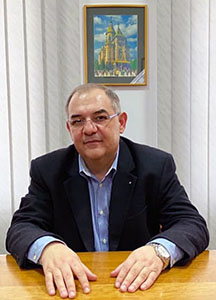
Prof. Dr. Octavian Crețu
Editor In Chief
Aims
Launched in 1955, Timișoara Medical Journal is an open-access peer reviewed quarterly scientific journal, published by the Victor Babeș University of Medicine and Pharmacy in Timișoara, Romania.
Scope
Timișoara Medical Journal publishes original research articles, review articles, meta-analyses, and case reports in the following fields:
- Medicine
- Dental Medicine
- Pharmacy
Ethical Statement
Timișoara Medical Journal fully adheres to the Core Practices of the Committee on Publication Ethics (COPE).
Open-Access / Copyright Policy
All the articles published in the Timișoara Medical Journal will be Open-Access articles distributed under the terms and conditions of the Creative Commons Attribution License (CC BY). The copyright is retained by the authors. At the end of any published text, the following note will be inserted:
"Copyright by the authors. Licensed as an open access article using a CC BY 4.0 license."

Open-Access / Copyright Policy
All the articles published in the Timișoara Medical Journal will be Open-Access articles distributed under the terms and conditions of the Creative Commons Attribution License (CC BY). The copyright is retained by the authors. At the end of any published text, the following note will be inserted:
"Copyright by the authors. Licensed as an open access article using a CC BY 4.0 license."

Ethical Statements
Timișoara Medical Journal fully adheres to the Core Practices of the Committee on Publication Ethics (COPE) and supports the ICMJE Uniform Requirements.
Timișoara Medical Journal Editorial Office:
